The estate had grown by acquisition, and it showed
FTI Group had more than 90 subsidiaries and a digital estate assembled by buying companies and patching what they came with. Every team designed its own buttons. Designers and developers rebuilt the same components in parallel, brand elements drifted between products, and every product change paid an integration tax on the way out. Accessibility was handled per team, if at all.
I did not get a design-system mandate. I made the case for one, and the case was the integration tax: what it costs, across 90 subsidiaries, to solve the same problem again every quarter.
Funded as a product, with a team and a number
The design system became its own product team: three design-system designers, four frontend developers, and myself as product owner. Quarterly Objectives and Key Results from Q4 2023 through Q3 2024. Business metrics the organization already used, which is the part that matters: return on investment, adoption rate, time to market, average task time in design and in code. A roadmap the consuming teams could see.
That framing is why it survived a year in which a lot else did not. A design system with a return on investment model is a line item with a defence. A design system with adoption statistics is a cost.
Research before foundations
Before any token was named we ran interviews, surveys and analytics reviews, assessed every digital product for accessibility and usability, refined the personas, and wrote design principles with stakeholders from across the group.
The system had to encode what this business needed. A component catalog assembled from habit would have encoded someone else’s business, and in a group this federated it would have been rejected on sight.
What shipped
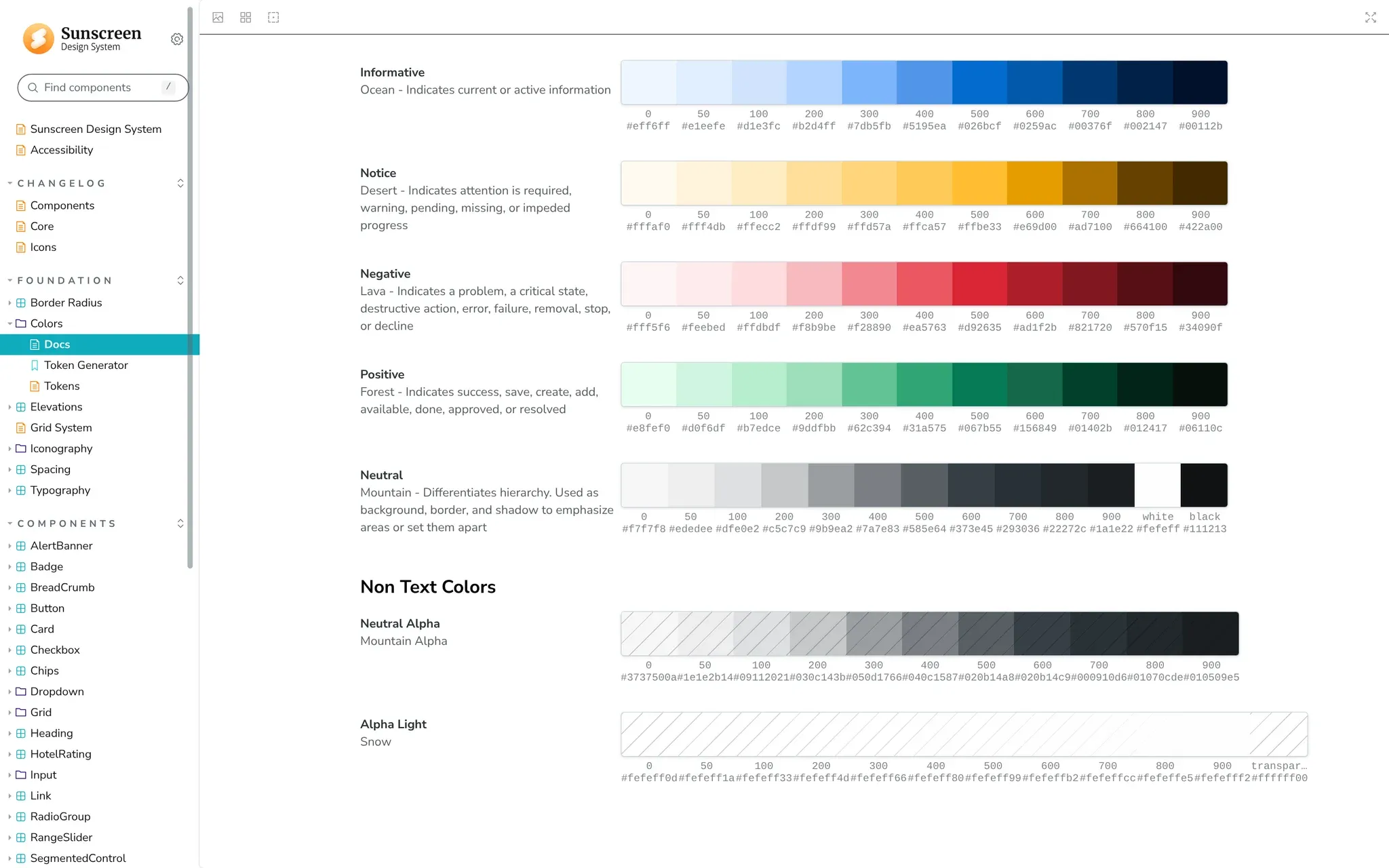
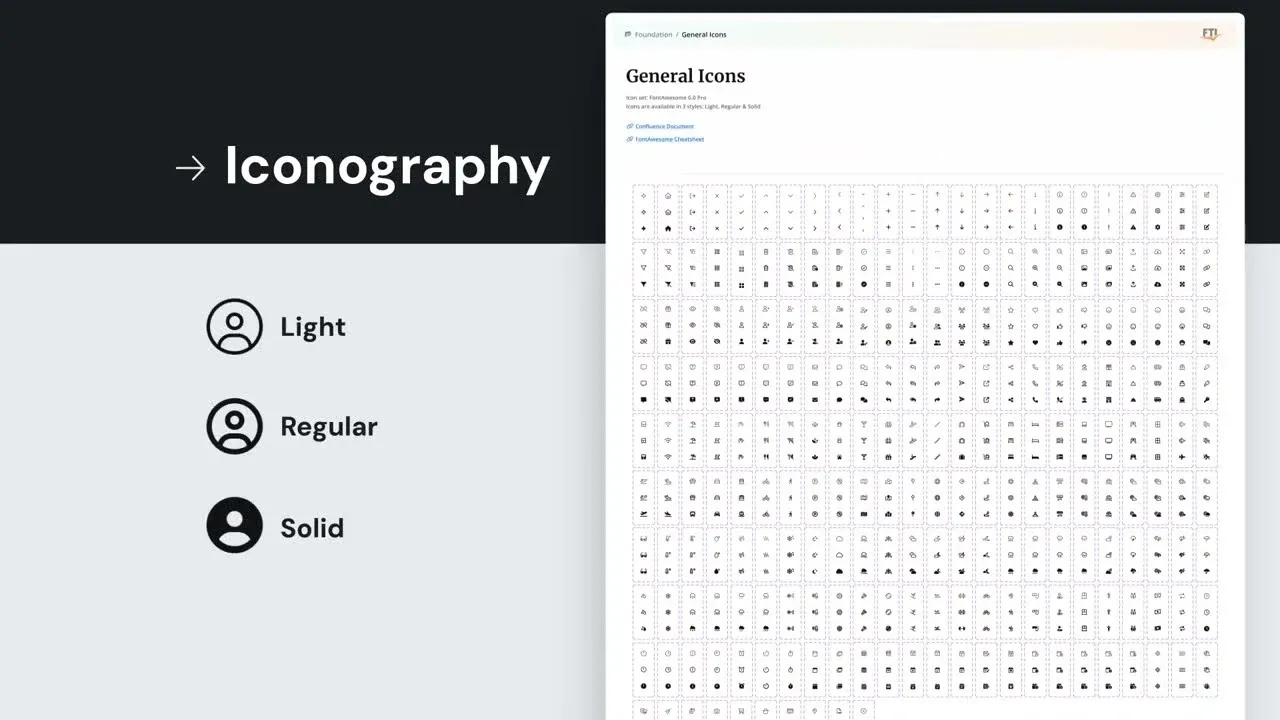
Foundations covering color, tokens, typography, spacing, layout, elevation, icons and semantic naming. A library of 356 components in 1,310 variants and 283 styles. A React UI library for the group’s Next.js stack, so the system existed in code and not only in Figma. A single source of truth for documentation on zeroheight, which is public to this day.
Accessibility as a group standard. WCAG and APCA contrast requirements were built into the tokens and the components, which made every new component accessible on the day it was written. Nobody had to remember a review step, and no team had to become an accessibility expert to pass one.
Pilot teams, then everyone else
Three product teams adopted ahead of the group, and their measured gains made the case to the rest. A mandate from above would have produced forks: in a federation of 90 subsidiaries, a team told to adopt something will copy it into their own repository and change it, and then there are two systems.
In its first two months the measured return on investment came in above 170 percent, time to market for the piloting teams fell by half, and designers and developers worked from one shared vocabulary for the first time. The system became the base for the homepage and comparison-page rebuild that followed, which is how a system stops being an internal project and starts being infrastructure.
Decisions
Win three teams before asking for ninety. Planned: a group mandate. In a federation that is the fast route, and it is what a steering committee will offer you. Argued: a team told to adopt something copies it into its own repository and changes it, and then the group has two systems and a committee to arbitrate between them. The only adoption that holds is the kind a team chooses because the team next door got faster. Happened: three pilot teams first, and what they could show afterwards did the persuading. The second wave arrived later than a mandate would have produced it, and it arrived without a fork.
Spend the first weeks auditing, before a single component. Planned: start building, because a design system is judged on what it contains and an empty library persuades nobody. Argued: a component library built on an unaudited estate encodes the inconsistencies it was meant to remove. What the brands already had, and where they had quietly diverged, is the specification. Happened: an audit and interviews before the first token, which is also where the return on investment model got its baseline. Without that baseline there is no number at the end, and the number is what kept the funding through a difficult year.
What I would do differently
Start adoption metrics on day one, before the first pilot ships.
We could show return and time to market convincingly. We could have shown adoption momentum earlier, and won the second wave of teams sooner, because the argument that moves a sceptical team is not the return on investment model. It is that three teams like theirs are already using it.